
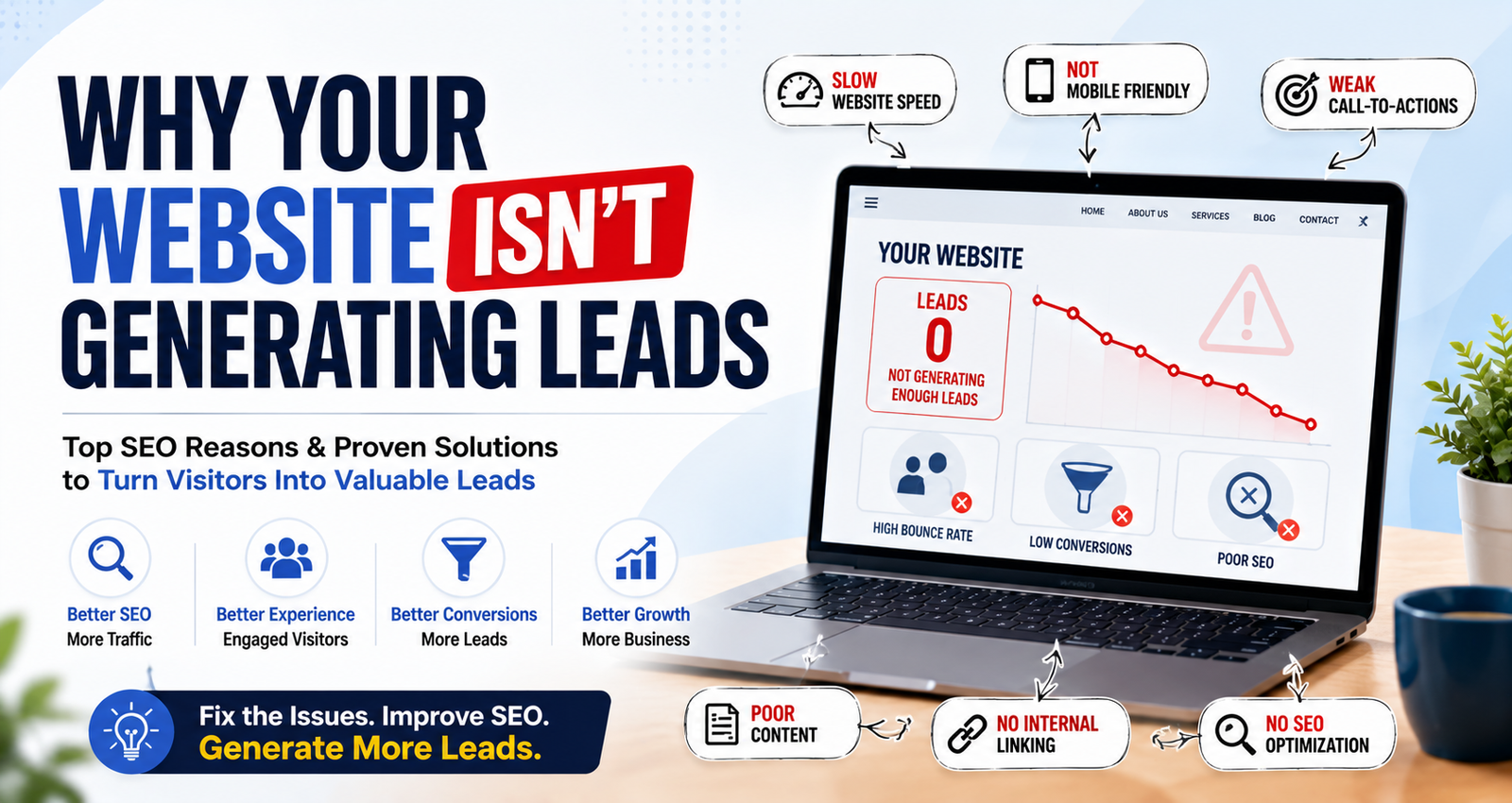
Why Your Website Isn't Generating Leads: An SEO Perspective
Discover why your website isn't generating leads and learn SEO strategies to improve traffic, conversions, and business growth.
Why Your Website Isn't Generating Leads is one of the most common questions business owners ask when their website receives traffic but fails to convert visitors into potential customers. A website is more than just an online presence—it should act as a lead-generation machine that attracts, engages, and converts visitors.
Many businesses invest in website design and digital marketing but still struggle to generate quality leads. The problem often lies in poor SEO practices, weak user experience, slow loading speed, and ineffective conversion strategies. In this blog, we will explore the key reasons your website may not be generating leads and how you can fix them.
Your Website Is Not Ranking for the Right Keywords
SEO starts with keyword targeting. If your website is not optimized for the keywords your audience is searching for, you will attract irrelevant traffic or no traffic at all.
Common Issues:
- Targeting highly competitive keywords
- Ignoring long-tail keywords
- Poor keyword placement
- Lack of keyword research
Solution:
Use SEO tools to identify relevant keywords with strong search intent. Focus on keywords that potential customers use when looking for your products or services.
Poor Website User Experience
User experience plays a major role in lead generation. Visitors leave websites that are difficult to navigate or visually confusing.
Signs of Poor UX:
- Complicated navigation
- Too many pop-ups
- Cluttered design
- Difficult-to-read content
Solution:
Create a clean, responsive, and user-friendly website that helps visitors find information quickly.
Slow Website Speed
Website speed directly impacts both SEO rankings and conversions. Users expect pages to load within seconds
Effects of Slow Loading:
- Increased bounce rate
- Lower search engine rankings
- Reduced user engagement
- Fewer lead submissions
Solution:
- Compress images
- Use browser caching
- Minimize unnecessary scripts
- Choose reliable hosting
Lack of Strong Call-to-Actions (CTAs)
Many websites fail because they do not guide users toward taking action.
Weak CTA Examples:
- Learn More
- Click Here
Effective CTA Examples:
- Get a Free Consultation
- Request a Demo
- Download Our Guide
- Contact Us Today
Your CTA should be visible, compelling, and strategically placed throughout the website.
Your Content Is Not Solving User Problems
Content is one of the most powerful lead-generation tools. If your content does not address user pain points, visitors will leave without taking action.
Content That Converts:
- Educational blogs
- Case studies
- Industry guides
- Checklists
- FAQs
Businesses that regularly publish high-quality content often generate more organic traffic and leads.
Mobile Optimization Is Missing
With the majority of users browsing on smartphones, mobile optimization is no longer optional.
Mobile SEO Checklist:
- Responsive design
- Fast loading speed
- Mobile-friendly navigation
- Readable text sizes
- Clickable buttons
Google prioritizes mobile-first indexing, making mobile optimization critical for lead generation.
Poor On-Page SEO
Even a visually attractive website can fail if basic SEO elements are missing.Important On-Page SEO Factors:
- Title tags
- Meta descriptions
- Header tags (H1, H2, H3)
- Internal linking
- Image optimization
- Keyword placement
Optimizing these elements helps search engines understand your content and improves visibility.
No Lead Magnets on the Website
A lead magnet encourages visitors to share their contact information in exchange for valuable content.
Popular Lead Magnets:
- Free eBooks
- Industry Reports
- Templates
- Free Audits
- Webinars
Lead magnets significantly improve conversion rates when paired with optimized landing pages.
Weak Internal Linking Structure
These links help users explore relevant pages and increase engagement.
Lack of Trust Signals
Visitors are unlikely to submit inquiries if they do not trust your business.
Trust-Building Elements:
- Testimonials
- Reviews
- Certifications
- Case Studies
- Client Logos
- Secure HTTPS Connection
Trust signals reassure visitors and improve lead conversion rates.