
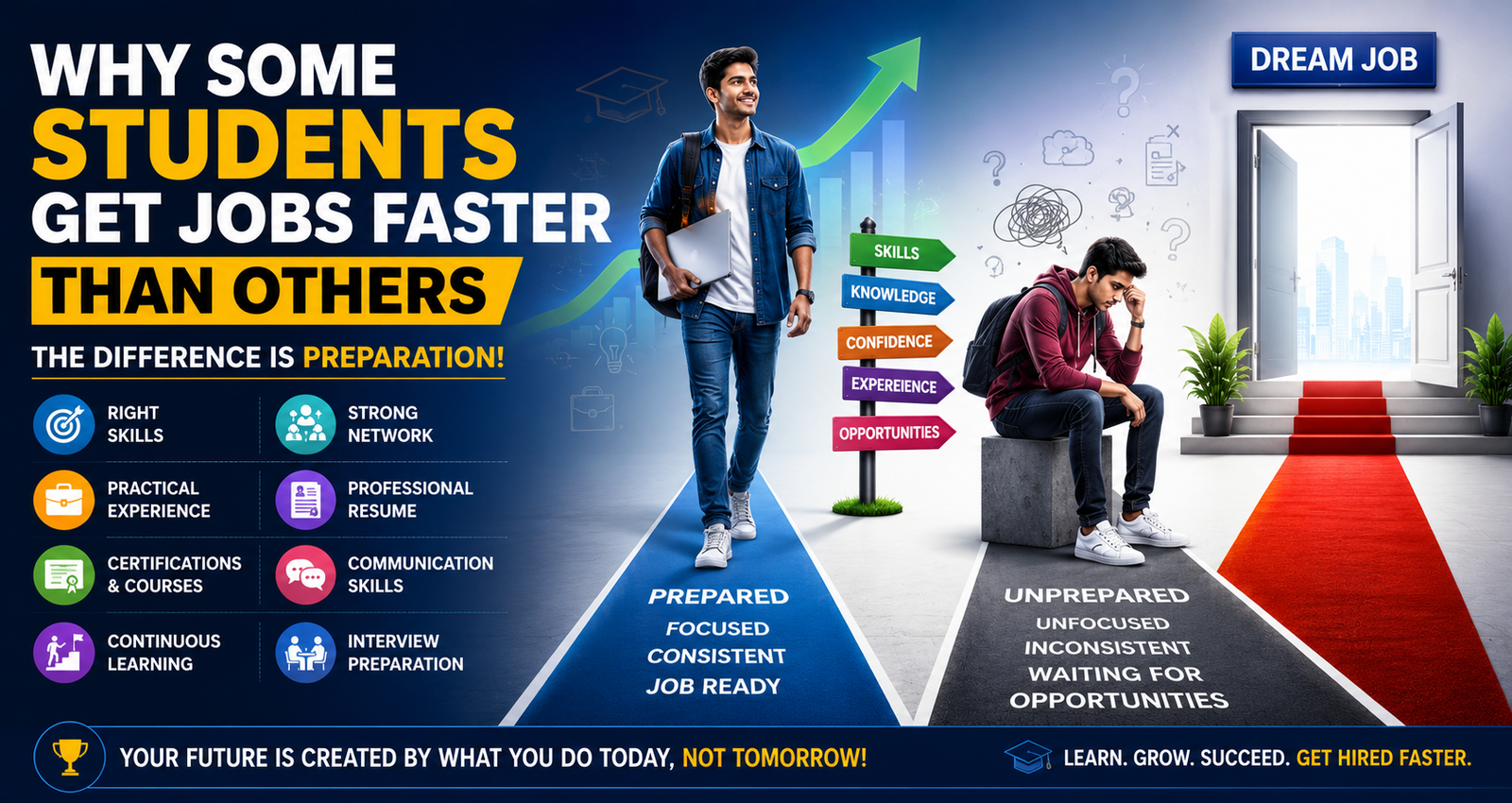
Why Some Students Get Jobs Faster Than Others
Discover why some students get jobs faster than others and learn the skills, strategies, and habits that improve employability.
Why Some Students Get Jobs Faster Than Others is a question many students ask after graduation. Every year, thousands of students complete their education with similar degrees, yet some secure jobs within weeks while others struggle for months. The difference is rarely about luck. In most cases, it comes down to skills, preparation, mindset, and career readiness.
Today's employers are looking for more than just academic qualifications. Companies want candidates who can solve problems, communicate effectively, adapt quickly, and contribute to business goals from day one. Students who understand these expectations and prepare accordingly often gain a significant advantage in the job market.
The hiring landscape has evolved dramatically. Recruiters now evaluate candidates based on practical experience, industry-relevant skills, certifications, internships, portfolios, and even personal branding. Students who actively invest in these areas tend to stand out from the competition.
The good news is that the factors influencing employability are largely within a student's control. By developing the right skills and following proven career-building strategies, students can dramatically improve their chances of landing a job faster.
In this blog, we'll explore why some students get jobs faster than others, the key factors employers consider during recruitment, and practical steps students can take to improve their employability.
Why Some Students Get Jobs Faster Than Others
1. They Focus on Skills, Not Just Degrees
One of the biggest reasons why some students get jobs faster than others is that they prioritize practical skills alongside academics.
Employers value candidates who can:
- Perform real-world tasks
- Use industry tools
- Solve business problems
- Deliver measurable results
Popular job-ready skills include:
- Digital Marketing
- Data Analysis
- Graphic Design
- Content Creation
- Programming
- Social Media Marketing
Skills often create a stronger impact than grades alone.
2. They Gain Practical Experience Early
Students who complete internships and live projects gain valuable experience before graduation.
Benefits of Practical Experience
- Industry exposure
- Better understanding of workplace expectations
- Stronger resumes
- Improved confidence
Practical learning helps students become job-ready faster.
3. They Build Strong Communication Skills
Communication is one of the most important employability factors.
Students who communicate effectively can:
- Perform better in interviews
- Collaborate with teams
- Present ideas confidently
- Build professional relationships
Strong communication skills often make candidates more attractive to employers
4. They Continuously Learn New Skills
The job market evolves constantly.
Another reason why some students get jobs faster than others is their commitment to continuous learning.
Successful students regularly:
- Take online courses
- Earn certifications
- Learn new technologies
- Stay updated with industry trends
Lifelong learning increases career opportunities.
5. They Create a Professional Resume
A well-structured resume can significantly improve interview opportunities.
Effective Resumes Include
- Relevant skills
- Certifications
- Internships
- Projects
- Achievements
Students who invest time in creating professional resumes often receive more interview calls.
Common Mistakes That Delay Job Opportunities
Many students struggle because they make avoidable mistakes.
Depending Only on Academic Marks
Grades alone rarely guarantee employment.
Ignoring Skill Development
Practical skills are increasingly important.
Lack of Networking
Many opportunities come through professional connections.
Poor Resume Quality
Weak resumes often fail to attract recruiters.
Avoiding Internships
Experience matters even for entry-level positions.
Avoiding these mistakes can improve employability significantly.
How Students Can Increase Their Employability
Students can improve their job prospects by:
Learning Industry-Relevant Skills
Focus on skills employers actively demand.
Earning Certifications
Certifications demonstrate commitment and expertise.
Building a Portfolio
Showcase projects and achievements.
Participating in Internships
Gain real-world experience.
Improving Communication Skills
Develop both verbal and written communication abilities.
These actions help students stand out in competitive job markets.