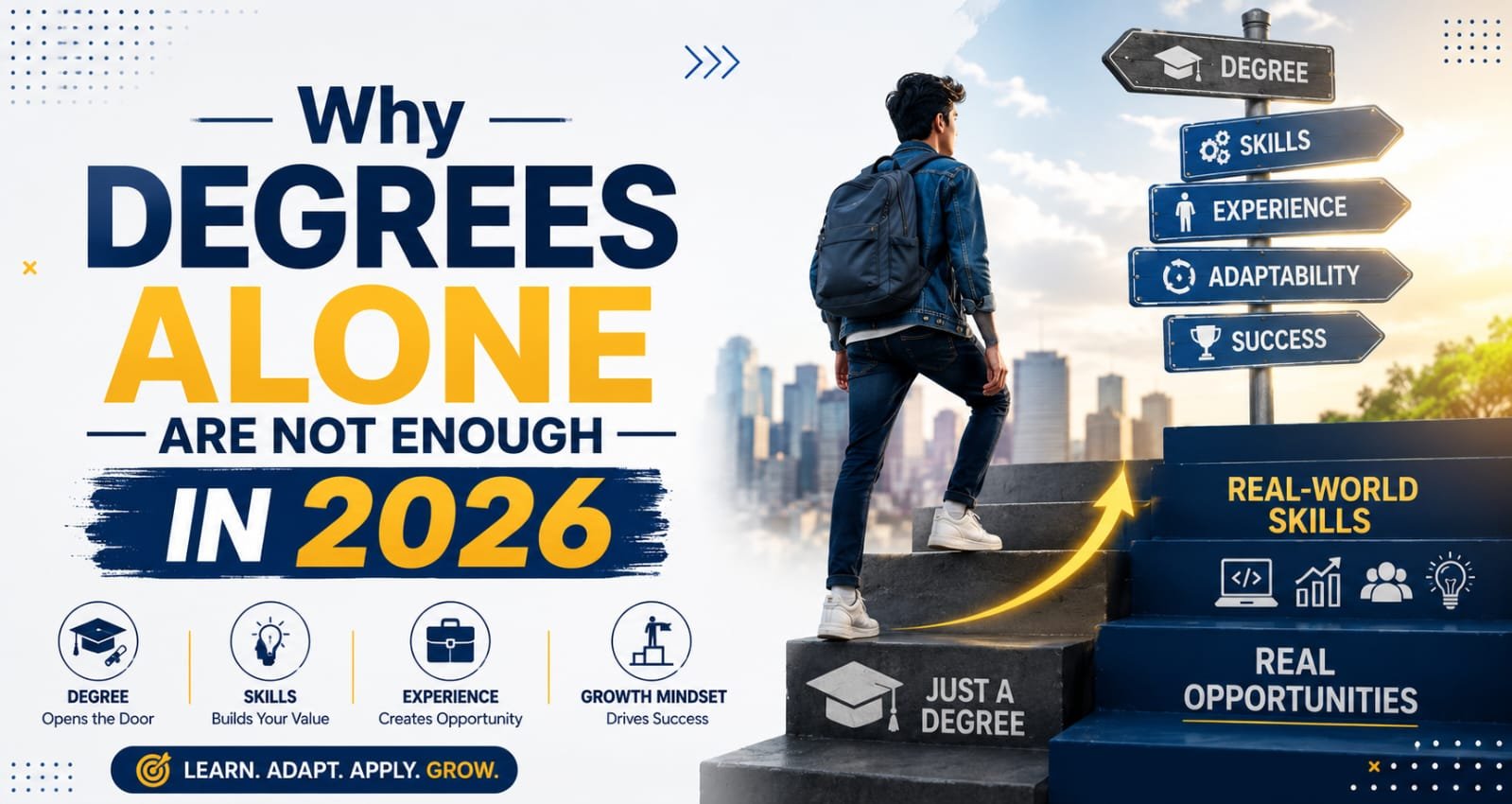
Why Degrees Alone Are Not Enough in 2026
Discover why degrees alone are not enough in 2026 and how skills, certifications, internships, and practical experience boost career success.
Why Degrees Alone Are Not Enough in 2026
Why Degrees Alone Are Not Enough in 2026 is a question that every student, graduate, and job seeker should seriously think about today. The job market has changed dramatically over the last few years. While earning a degree is still important, companies are now looking for much more than academic qualifications. Employers want candidates who can solve real-world problems, adapt to new technologies, communicate effectively, and contribute from day one.
In 2026, industries are evolving faster than ever due to artificial intelligence, automation, digital transformation, and changing consumer behavior. As a result, having only a degree is no longer enough to guarantee a successful career. Students need practical skills, hands-on experience, certifications, and a growth mindset to stand out in a competitive job market.
The Changing Job Market in 2026
The modern workplace is very different from what it was a decade ago. Companies are adopting AI tools, cloud technologies, data analytics, and automation systems to improve efficiency. This rapid transformation has created a demand for professionals who can quickly adapt to new tools and technologies.
Many employers now prioritize skills over traditional qualifications. They want candidates who can demonstrate their abilities through projects, internships, portfolios, certifications, and practical experience. While a degree provides theoretical knowledge, employers often seek proof that candidates can apply that knowledge in real-world situations.
Why Degrees Alone Are Not Enough in 2026
1. Skills Matter More Than Memorization
Traditional education often focuses on exams and theoretical concepts. However, modern organizations need professionals who can perform practical tasks and solve business challenges.
For example, a marketing graduate who knows how to run Google Ads campaigns, create content strategies, and analyze website traffic will often have an advantage over someone who only has academic knowledge.
This is one of the biggest reasons why degrees alone are not enough in 2026. Employers value skills that directly contribute to business growth.
2. Technology Changes Faster Than College Syllabuses
Many university curriculums take years to update. By the time new technologies are included in a syllabus, the industry may already be using more advanced tools.
Fields such as:
-
Digital Marketing
-
Artificial Intelligence
-
Data Analytics
-
Cybersecurity
-
UI/UX Design
-
Software Development
change rapidly. Professionals who continuously learn new skills remain relevant and employable.
3. Employers Want Job-Ready Candidates
Organizations spend significant time and resources training new employees. Therefore, they prefer candidates who already possess practical experience.
Candidates with:
-
Internships
-
Freelance projects
-
Certifications
-
Portfolio websites
-
Industry experience
often receive better opportunities than candidates who only hold degrees.
The Rise of Skill-Based Hiring
One major trend in 2026 is skill-based hiring. Instead of focusing only on educational qualifications, companies evaluate what a candidate can actually do.
Recruiters commonly assess:
-
Problem-solving abilities
-
Communication skills
-
Technical expertise
-
Teamwork
-
Leadership qualities
-
Adaptability
Many companies now conduct practical assessments and project-based interviews instead of relying solely on resumes.
This trend further proves why degrees alone are not enough in 2026 for long-term career success.
Importance of Digital Skills in 2026
Digital skills have become essential across almost every industry. Whether someone works in healthcare, finance, education, retail, or manufacturing, technology plays a significant role in daily operations.
Some highly demanded skills include:
Digital Marketing
Businesses need experts who can generate leads, increase online visibility, and build brand awareness.
Data Analytics
Organizations use data-driven insights to make smarter decisions.
Artificial Intelligence
AI tools are transforming workflows and improving productivity.
Content Creation
Companies require engaging content for websites, social media, and marketing campaigns.
Search Engine Optimization (SEO)
SEO professionals help businesses improve rankings and attract organic traffic.
Developing these skills can significantly improve employability and career growth.
Why Certifications Are Becoming More Valuable
Professional certifications help candidates demonstrate specialized knowledge and practical expertise.
Popular certifications include:
-
Google Certifications
-
Meta Certifications
-
HubSpot Certifications
-
AI Certifications
-
SEO Certifications
-
Data Analytics Certifications
These certifications often focus on current industry practices, making them highly relevant to employers.
While a degree establishes educational credibility, certifications show a commitment to continuous learning.
The Importance of Real-World Experience
Experience remains one of the strongest indicators of professional capability.
Students can gain experience through:
-
Internships
-
Freelancing
-
Personal projects
-
Volunteer work
-
Industry collaborations
-
Startup involvement
A candidate who has completed real projects demonstrates initiative, responsibility, and practical problem-solving skills.
This practical exposure bridges the gap between education and employment.
Building a Personal Brand
In 2026, personal branding plays a crucial role in career development.
Professionals can build their personal brand through:
-
LinkedIn profiles
-
Professional portfolios
-
Blogs
-
Industry networking
-
Social media content
-
Public speaking
A strong personal brand helps individuals showcase expertise and attract career opportunities.
Employers often review online profiles before making hiring decisions.