
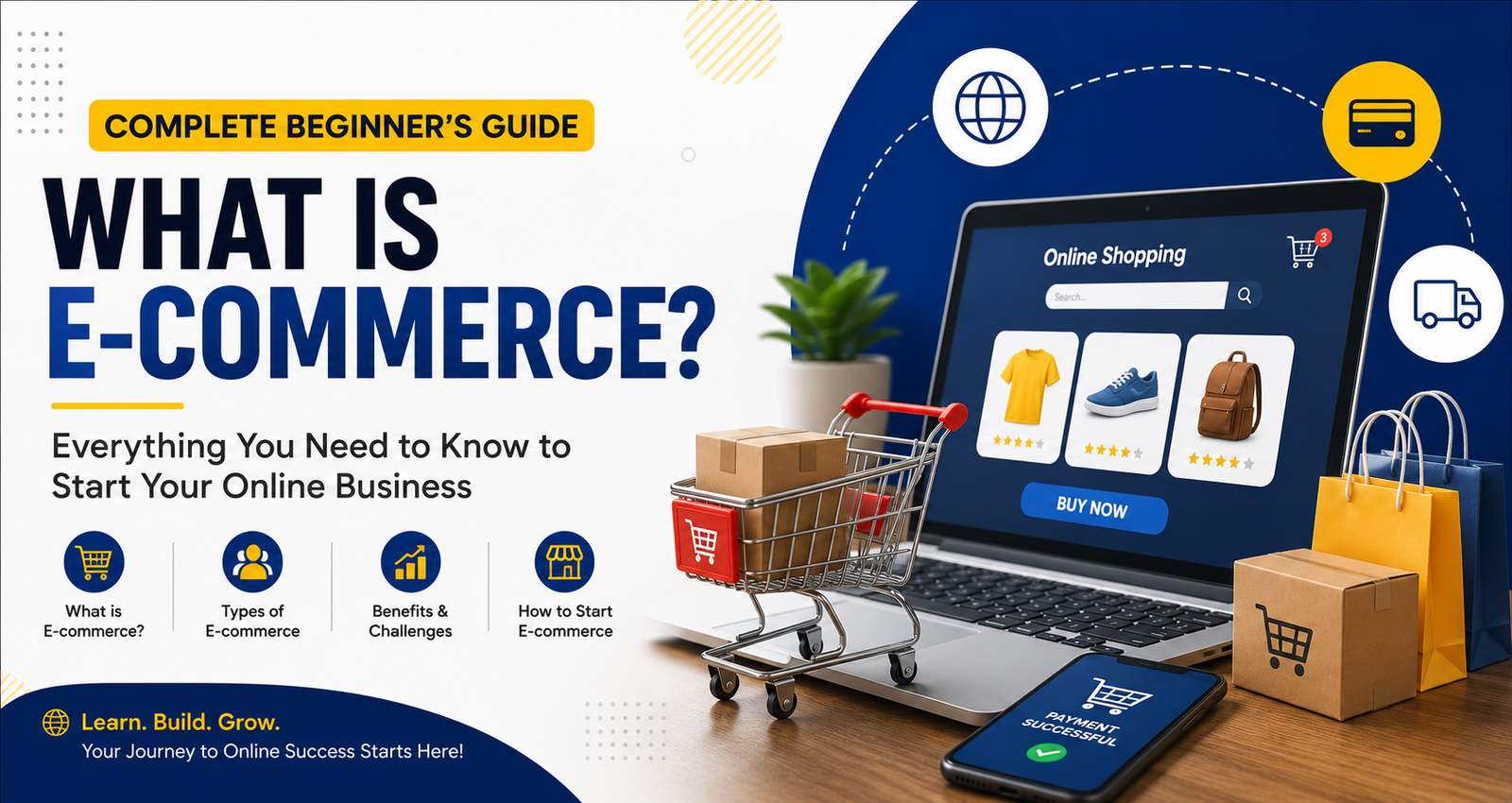
What is E-commerce? Complete Beginner's Guide
Learn what E-commerce is, how it works, its types, benefits, challenges, and how to start an online business with this beginner-friendly guide.
What is E-commerce? Complete Beginner's Guide
E-commerce is one of the fastest-growing industries in the world today. Whether you purchase clothes from Amazon, order food online, or subscribe to a digital service, you are participating in E-commerce.
The term E-commerce stands for Electronic Commerce, which refers to buying and selling products or services through the internet. Businesses use E-commerce platforms to reach customers globally, while customers enjoy the convenience of shopping from anywhere at any time.
With the rapid growth of digital technology, E-commerce has transformed the way people shop and businesses operate. Understanding E-commerce is essential for anyone looking to start an online business or build a career in digital marketing.
What is E-commerce?
E-commerce, or Electronic Commerce, is the process of conducting business transactions online. It involves purchasing and selling products, services, and digital goods through websites, mobile applications, and online marketplaces.
Unlike traditional retail stores, E-commerce businesses operate through digital platforms, allowing customers to browse products, make payments, and receive deliveries without visiting a physical location.
Popular examples of E-commerce platforms include Amazon, Flipkart, Shopify stores, and many other online marketplaces.
How Does E-commerce Work?
The E-commerce process is simple and customer-friendly.
1: Product Listing
Businesses upload product information, descriptions, pricing, and images to their E-commerce website.
2: Customer Browsing
Customers visit the website, search for products, compare options, and add items to their cart.
3: Online Payment
The customer completes the purchase using online payment methods such as credit cards, debit cards, UPI, wallets, or net banking.
4: Order Processing
The business receives the order and prepares the product for shipment.
5: Delivery
The product is delivered to the customer through a logistics or courier partner.
Types of E-commerce
1. Business-to-Consumer (B2C)
This is the most common E-commerce model where businesses sell products directly to consumers.
Example:
Amazon, Flipkart
2. Business-to-Business (B2B)
Businesses sell products or services to other businesses.
Example:
Wholesale suppliers and SaaS companies.
3. Consumer-to-Consumer (C2C)
Consumers sell products directly to other consumers.
Example:
OLX, eBay
4. Consumer-to-Business (C2B)
Individuals provide products or services to businesses.
Example:
Freelancers offering digital marketing or graphic design services.
Benefits of E-commerce
Global Reach
Businesses can sell products worldwide without opening physical stores.
Lower Operating Costs
Online stores require less investment compared to traditional retail stores.
24/7 Availability
Customers can shop anytime, increasing sales opportunities.
Better Customer Experience
Customers can easily compare products, read reviews, and make informed decisions.
Data-Driven Decisions
Businesses can track customer behavior and optimize marketing strategies.
Challenges of E-commerce
High Competition
The E-commerce market is highly competitive.
Security Concerns
Businesses must ensure secure payment gateways and customer data protection.
Logistics Management
Managing inventory, shipping, and returns can be challenging.
Customer Trust
Building trust is essential for online businesses.
Essential Components of an E-commerce Website
User-Friendly Design
A clean and responsive website improves customer experience.
Product Pages
Detailed product descriptions and images help customers make purchasing decisions.
Secure Payment Gateway
Customers must feel confident when making online payments.
Mobile Optimization
Most E-commerce purchases are now made using mobile devices.
Customer Support
Providing quick support improves customer satisfaction.
How to Start an E-commerce Business
Choose a Niche
Select a product category with demand and growth potential.
Research Your Target Audience
Understand customer needs and preferences.
Build Your Website
Use platforms such as Shopify, WooCommerce, or Magento.
Add Products
Create attractive product listings with quality images.
Implement Digital Marketing
Promote your E-commerce business using SEO, social media marketing, and paid advertising.
Future of E-commerce
The future of E-commerce looks promising with technologies such as Artificial Intelligence, Voice Commerce, Augmented Reality, and Personalized Shopping Experiences.
Businesses that adapt to these innovations will gain a competitive advantage in the digital marketplace.