
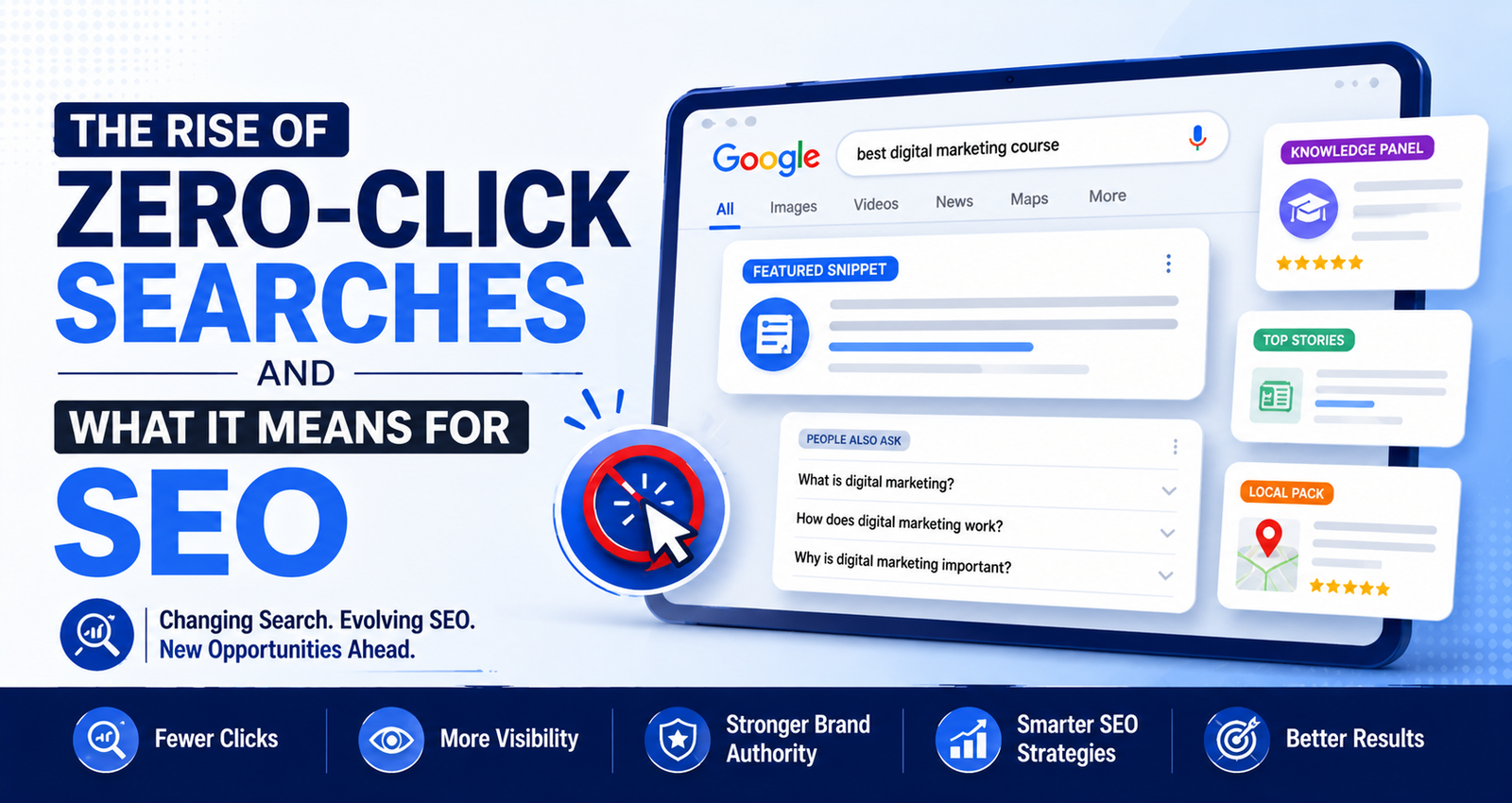
The Rise of Zero-Click Searches and What It Means for SEO
Learn how zero-click searches are changing SEO, reducing clicks, and how businesses can adapt with modern optimization strategies.
The Rise of Zero-Click Searches and What It Means for SEO
The Rise of Zero-Click Searches and What It Means for SEO is one of the most important topics in digital marketing today. Search engines are evolving rapidly, and users are getting answers directly on the search results page without clicking on any website. This trend is known as zero-click search.
For businesses, marketers, and website owners, understanding the rise of zero-click searches and what it means for SEO is crucial. Traditional SEO strategies focused mainly on increasing website traffic, but today the goal is also to gain visibility directly within search engine results pages (SERPs).
In this blog, we will explore what zero-click searches are, why they are increasing, and how businesses can adapt their SEO strategies to remain competitive.
What Are Zero-Click Searches?
A zero-click search occurs when a user receives the information they need directly on the search engine results page and does not click on any website link.
Examples include:
- Featured snippets
- Knowledge panels
- Google Business Profiles
- AI-generated answers
- Weather forecasts
- Sports scores
- Currency conversions
- People Also Ask sections
For example, when someone searches "What is SEO?" Google often displays a quick answer at the top of the page. Users get their answer instantly and may never visit a website.
Why Are Zero-Click Searches Increasing?
1. Google's Focus on User Experience
Google aims to provide answers as quickly as possible. By displaying information directly on the search page, users save time and find answers faster.
2. Growth of Mobile Search
Mobile users prefer quick answers. Since mobile screens are smaller, Google prioritizes concise information that users can access immediately.
3. AI-Powered Search Results
Artificial Intelligence has transformed search engines. AI-generated summaries and direct answers are becoming more common, reducing the need for users to click through to websites.
4. Voice Search Adoption
Voice assistants like Siri and Google Assistant typically provide a single spoken answer. This naturally supports the growth of zero-click searches.
How Zero-Click Searches Impact SEO
Reduced Organic Clicks
Many websites are experiencing fewer clicks even when ranking on the first page of Google.
Increased Competition for Visibility
Businesses now compete not only for rankings but also for featured snippets and knowledge panels.
Benefits of Zero-Click Searches
Although many marketers see zero-click searches as a challenge, there are advantages as well.
Enhanced Brand Visibility
Appearing in featured snippets can increase brand exposure even without a click.
Improved Authority
Users often perceive websites featured in Google's answer boxes as trustworthy sources.
Better User Experience
Quick answers improve user satisfaction and can increase brand recognition over time.
Challenges Created by Zero-Click Searche
Lower Website Traffic
The biggest concern is reduced organic traffic because users find answers without visiting websites.
Difficult Performance Measurement
Traditional SEO metrics focused heavily on clicks. Marketers must now track impressions, visibility, and engagement.
Greater Dependence on Search Engines
Businesses have less control over how information is displayed in search results.
The Role of AI in Zero-Click Searches
Artificial intelligence is accelerating the rise of zero-click searches.
AI-powered search results can:
- Summarize content
- Answer complex questions
- Provide recommendations
- Generate instant responses
As AI continues evolving, businesses must create content that demonstrates expertise and provides unique value beyond basic answers.
What Businesses Should Do Next
Businesses should shift from focusing solely on clicks to focusing on visibility and authority.
Key actions include:
- Optimize for featured snippets.
- Improve content quality.
- Use structured data.
- Build strong brand authority.
- Focus on user intent.
- Invest in local SEO.
- Monitor search visibility metrics.
For businesses looking to build modern digital marketing skills, exploring professional training programs can help teams stay updated with evolving SEO trends.
Learn more through our Digital Marketing Training Programs and SEO Learning Resources available on our website.