
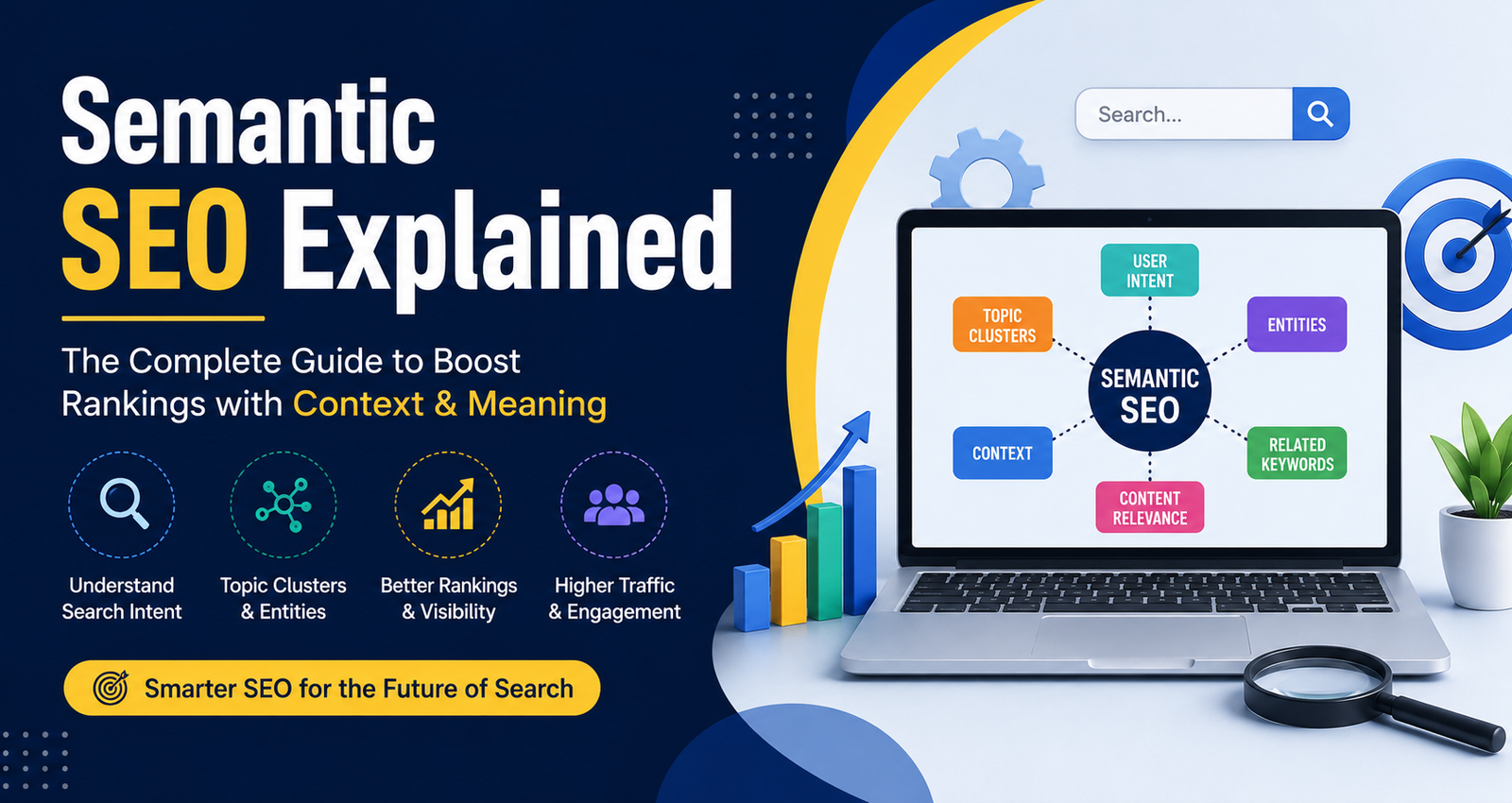
Semantic SEO Explained: Complete Guide for Better Search Rankings in 2026
Learn Semantic SEO Explained with topic clusters, entities, search intent, and optimization techniques to improve rankings and organic traffic.
Semantic SEO Explained: Complete Guide for Better Search Rankings in 2026
Semantic SEO Explained simply means optimizing content based on the meaning, context, and user intent behind a search query rather than focusing only on exact keywords. Modern search engines like Google have become smarter and can understand relationships between topics, entities, and user behavior. This is why Semantic SEO has become one of the most important SEO strategies in 2026.
Instead of creating separate pages for every keyword variation, Semantic SEO helps websites build comprehensive content that answers multiple related questions within a single topic. This improves user experience, increases topical authority, and helps websites rank for hundreds of relevant keywords.
What is Semantic SEO?
Semantic SEO is the process of creating content that helps search engines understand the context and meaning of a topic. It focuses on relationships between keywords, entities, concepts, and user intent.
For example, if you write about "Digital Marketing," Semantic SEO suggests covering related topics such as:
- SEO
- Content Marketing
- Social Media Marketing
- PPC Advertising
- Email Marketing
- Analytics
This helps search engines understand that your page is a complete resource on the subject
Why Semantic SEO is Important
Better Search Engine Understanding
Google uses Artificial Intelligence and Natural Language Processing (NLP) to understand content. Semantic SEO helps search engines identify the actual meaning of your content.
Improved Rankings
A well-optimized Semantic SEO strategy allows your page to rank for multiple keywords instead of just one.
Better User Experience
Users get comprehensive answers without needing to visit multiple websites.
Higher Organic Traffic
When content covers related topics, it attracts traffic from a wider range of search queries.
How Semantic SEO Works
1. Understanding Search Intent
Search intent refers to the reason behind a user's search query.
Common types include:
Informational Intent
Users want information.
Example:
- What is Semantic SEO?
Navigational Intent
Users want to visit a specific website.
Example:
- Google Search Console
Transactional Intent
Users want to buy something.
Example:
- Buy SEO Course Online
Commercial Investigation
Users compare products or services.
Example:
- Best Digital Marketing Course
2. Using Topic Clusters
Topic clusters are groups of related content connected around a main topic.
Example:
Pillar Topic:
Semantic SEO
Supporting Topics:
- Entity SEO
- Search Intent
- Topic Clusters
- NLP SEO
- Content Optimization
This structure improves website authority and internal linking.
3. Entity-Based Optimization
Entities are people, places, organizations, products, or concepts recognized by search engines.
Examples of SEO entities:
- Digital Marketing
- Search Engine Optimization
- Content Marketing
Including relevant entities helps search engines understand your content more accurately.
Best Practices for Semantic SEO
Create Comprehensive Content
Cover every aspect of the topic in detail.
Use Related Keywords
Include:
- Primary Keywords
- Secondary Keywords
- Long-Tail Keywords
- LSI Keywords
Optimize Heading Structure
Use:
- H1 for main title
- H2 for major sections
- H3 for subtopics
Add Internal Links
Internal links improve navigation and distribute page authority across the website.
Example Internal Links:
- Digital Marketing Course Page
- SEO Training Program Page
Add External Links
External links improve credibility by referencing trusted sources.
Examples:
- Google Search Central
- Wikipedia SEO Guide
Use Structured Data
Schema markup helps search engines understand page content better and can improve rich results.
Common Semantic SEO Mistakes
Keyword Stuffing
Repeating keywords excessively can harm rankings.
Ignoring Search Intent
Content should match what users actually want.
Thin Content
Short and incomplete content often performs poorly.
Poor Internal Linking
Lack of internal links reduces website structure effectiveness.
Semantic SEO Tools
Google Search Console
Helps monitor website performance.
Google Keyword Planner
Useful for keyword research.
Ahrefs
Provides backlink and keyword data.
SEMrush
Helps with competitor analysis and topic research.
Surfer SEO
Optimizes content using semantic keyword recommendations.