
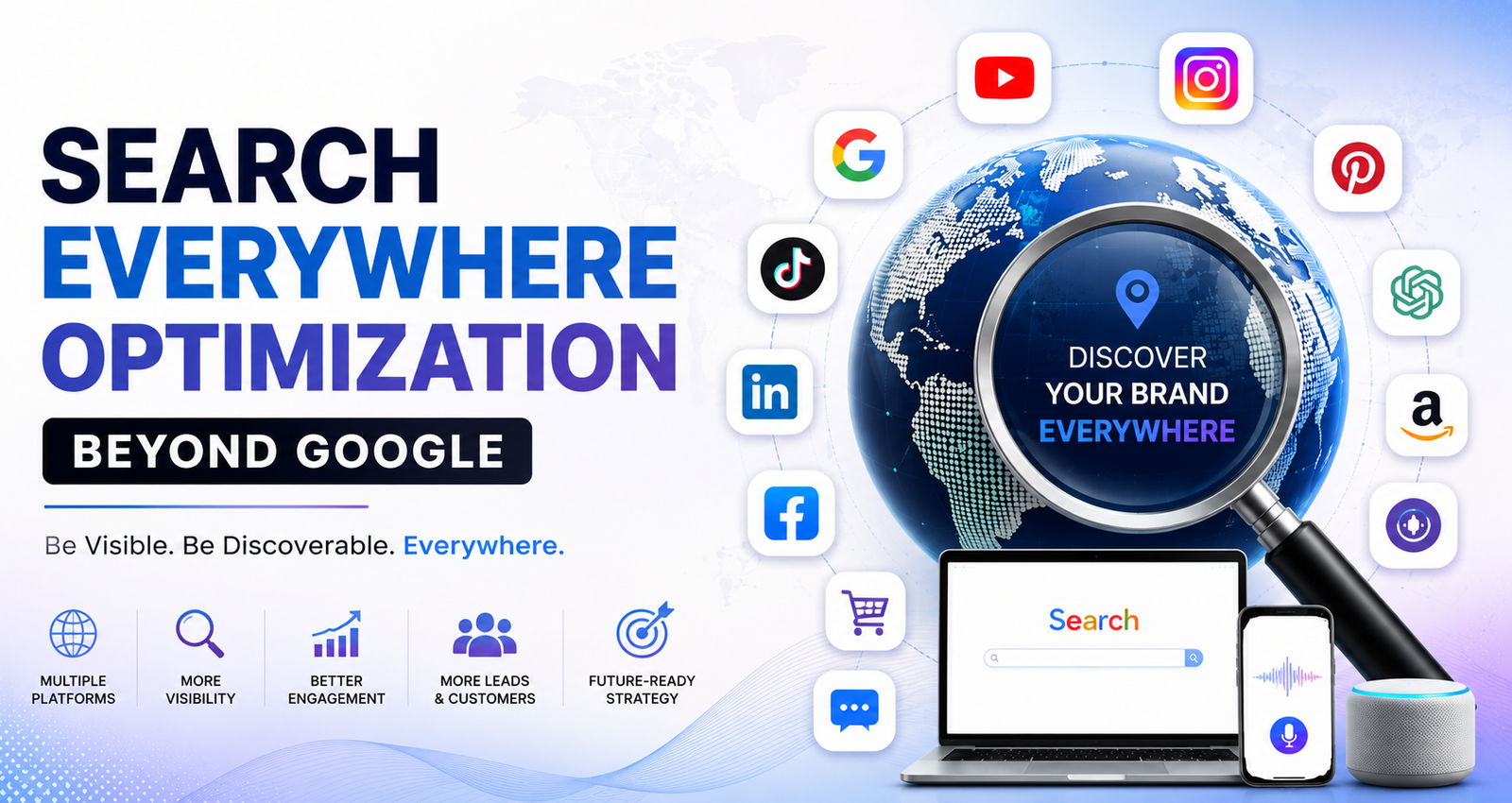
Search Everywhere Optimization: Beyond Google – The Future of Digital Visibility
Learn Search Everywhere Optimization beyond Google. Discover how to optimize your brand for AI, YouTube, social media, marketplaces, and voice search.
Search Everywhere Optimization: Beyond Google – The Future of Digital Visibility
Search Everywhere Optimization is changing the way businesses approach online visibility. Gone are the days when ranking on Google alone was enough to attract customers. Today, users search on YouTube, Instagram, LinkedIn, Amazon, ChatGPT, voice assistants, and even marketplaces before making decisions. If your brand appears only on Google, you're missing a significant share of potential traffic and customers.
Modern digital marketing is no longer about optimizing for one search engine—it's about being discoverable wherever your audience searches.
What is Search Everywhere Optimization?
Search Everywhere Optimization is a digital marketing strategy that helps your brand become visible across multiple search platforms instead of focusing only on Google Search.
These platforms include:
- Google Search
- YouTube
- Amazon
- ChatGPT & AI Search
- Bing
- Voice Search
- Quora
Users now search differently depending on their needs. Someone looking for product reviews may visit YouTube, while another person may ask ChatGPT for recommendations or search Instagram for inspiration.
Why Google Alone Is No Longer Enough
Consumer behavior has changed dramatically.
Examples include:
- Students search YouTube for tutorials.
- Professionals search LinkedIn for industry insights.
- Shoppers search Amazon before Google.
- Gen Z often searches Instagram or TikTok for recommendations.
- Many users now ask AI assistants like ChatGPT before opening a browser.
This shift means businesses need Search Everywhere Optimization to remain competitive.
Platforms You Should Optimize
Google Search
Google still drives a large portion of website traffic. Continue optimizing your:
- Website content
- Meta titles
- Meta descriptions
- Technical SEO
- Page speed
- Internal linking
YouTube SEO
YouTube is the world's second-largest search engine.
Optimize:
- Video titles
- Descriptions
- Keywords
- Thumbnails
- Captions
- Playlists
Educational and tutorial videos perform exceptionally well.
Social Media Search
Instagram, Facebook, and LinkedIn have become powerful search platforms.
Improve discoverability by using:
- Relevant keywords in bio
- Keyword-rich captions
- Strategic hashtags
- Alt text
- Location tags
AI Search Optimization
AI tools like ChatGPT, Gemini, and Microsoft Copilot are changing search behavior.
Brands should:
- Publish high-quality content
- Build authority
- Answer real user questions
- Use structured headings
- Create trustworthy information
AI prefers useful and well-organized content.
Voice Search Optimization
Voice searches are conversational.
Instead of:
"Digital Marketing"
Users ask:
"What is the best digital marketing course near me?"
Optimize with:
- FAQ pages
- Natural language
- Long-tail keywords
- Local SEO
Marketplace Search Optimization
If you sell products, optimize for:
- Amazon
- Flipkart
- Meesho
Focus on:
- Product titles
- Bullet points
- Images
- Reviews
- Keywords
Benefits of Search Everywhere Optimization
Businesses adopting Search Everywhere Optimization enjoy several advantages.
Higher Brand Visibility
Your business appears wherever customers search.
More Organic Traffic
Traffic comes from multiple channels instead of relying only on Google.
Better Brand Authority
Being visible across platforms builds trust and credibility.
Increased Leads
More visibility results in more inquiries, sales, and conversions.
Future-Proof Marketing
As AI and new search platforms grow, your business stays competitive.
Best Practices for Search Everywhere Optimization
Create Platform-Specific Content
Different platforms require different content formats.
Examples:
- Blogs for Google
- Videos for YouTube
- Reels for Instagram
- Articles for LinkedIn
- FAQs for AI Search
Use Consistent Branding
Keep your:
- Logo
- Business name
- Contact information
- Website URL
consistent across all platforms.
Track Performance
Monitor traffic using analytics tools.
Measure:
- Organic traffic
- Engagement
- Search rankings
- Click-through rate
- Conversion rate
Optimize continuously based on data.