
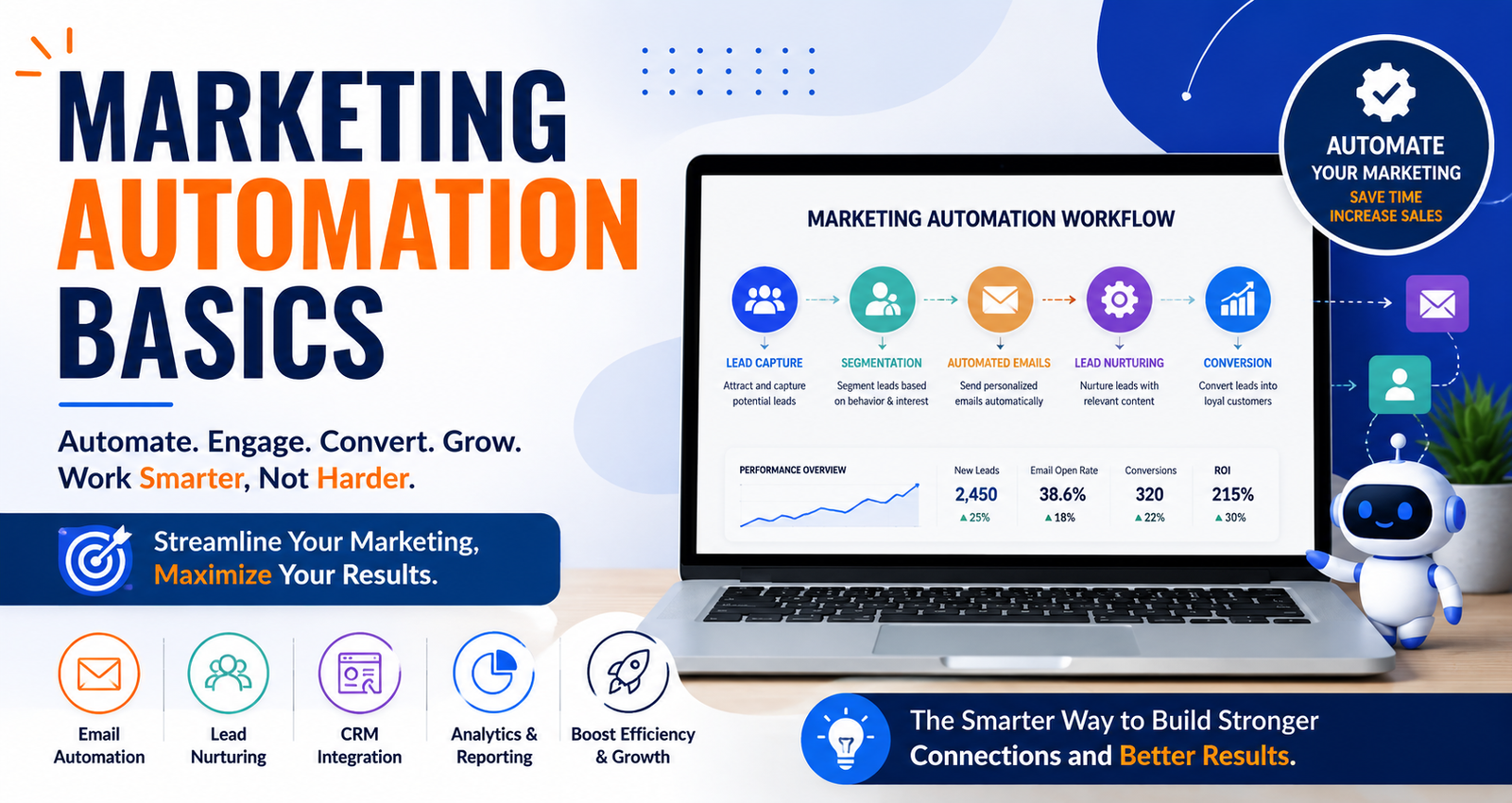
Marketing Automation Basics: A Beginner’s Guide to Smarter Digital Marketing
Learn marketing automation basics, benefits, tools, and strategies to streamline campaigns, improve customer engagement, and boost business growth
Marketing Automation Basics:
Marketing Automation Basics are essential for businesses looking to improve efficiency, generate more leads, and create personalized customer experiences. In today's digital world, marketers handle multiple channels, campaigns, and customer interactions simultaneously. Managing these tasks manually can be time-consuming and prone to errors.
Marketing automation helps businesses automate repetitive marketing activities such as email campaigns, lead nurturing, social media scheduling, customer segmentation, and follow-up communications. By implementing marketing automation, companies can save time, increase productivity, and improve conversion rates.
Whether you're a student learning digital marketing, a business owner seeking growth, or a marketing professional looking to scale campaigns, understanding marketing automation basics is critical for long-term success.
What Is Marketing Automation?
Marketing automation refers to the use of software and technology to automate repetitive marketing tasks and workflows.
These tasks include:
- Email marketing automation
- Lead nurturing
- Customer segmentation
- Social media scheduling
- CRM integration
Campaign tracking and reporting
The primary goal of marketing automation is to deliver the right message to the right audience at the right time.
Why Marketing Automation Matters
Marketing teams often spend significant time on repetitive activities. Marketing automation allows businesses to focus on strategy and customer engagement rather than manual processes.
Benefits of Marketing Automation
- Saves time and resources
- Improves lead generation
- Enhances customer engagement
- Increases conversion rates
- Provides better analytics and reporting
- Supports personalized communication
Marketing automation basics help businesses create consistent customer experiences while reducing operational workload.
Key Components of Marketing Automation
Email Marketing Automation
Email automation enables businesses to send pre-scheduled emails based on customer behavior.
Examples include:
- Welcome emails
- Abandoned cart reminders
- Newsletter campaigns
- Promotional offers
- Lead Nurturing
Lead nurturing helps businesses guide prospects through the buying journey using targeted content and automated follow-ups.
Customer Segmentation
Marketing automation platforms allow marketers to group customers based on:
- Demographics
- Interests
- Purchase history
- Website behavio
- Campaign Management
Automation tools simplify campaign execution by managing multiple channels from a single platform.
Popular Marketing Automation Tools
Several tools are available for implementing marketing automation.
Popular options include:
- HubSpot
- Mailchimp
- ActiveCampaign
- Brevo
- Zoho Marketing Automation
Each platform offers features designed to automate communication, lead management, and customer engagement.
How Marketing Automation Works
Marketing automation follows a simple workflow process:
Step 1: Capture Leads
Collect customer information through:
- Website forms
- Landing pages
- Social media campaigns
- Lead magnets
Step 2: Segment Your Audience
Group leads based on specific criteria.
Step 3: Create Automated Workflows
Develop sequences that trigger actions automatically.
Examples:
- Send welcome email after signup
- Send discount offer after product view
- Follow up after webinar registration
Step 4: Monitor Performance
Track open rates, click-through rates, and conversions to optimize campaigns
Best Practices for Marketing Automation
To achieve the best results:
- Define clear marketing goals
- Create customer-focused content
- Segment audiences accurately
- Test campaigns regularly
- Monitor key performance indicators
- Continuously optimize workflows
Successful marketing automation requires a balance between technology and human creativity.
Future of Marketing Automation
Artificial intelligence and machine learning are transforming marketing automation.
Emerging trends include:
- AI-powered personalization
- Predictive analytics
- Smart customer segmentation
- Automated content recommendations
- Advanced customer journey mapping
Businesses adopting these technologies will gain a competitive advantage in digital marketing.