
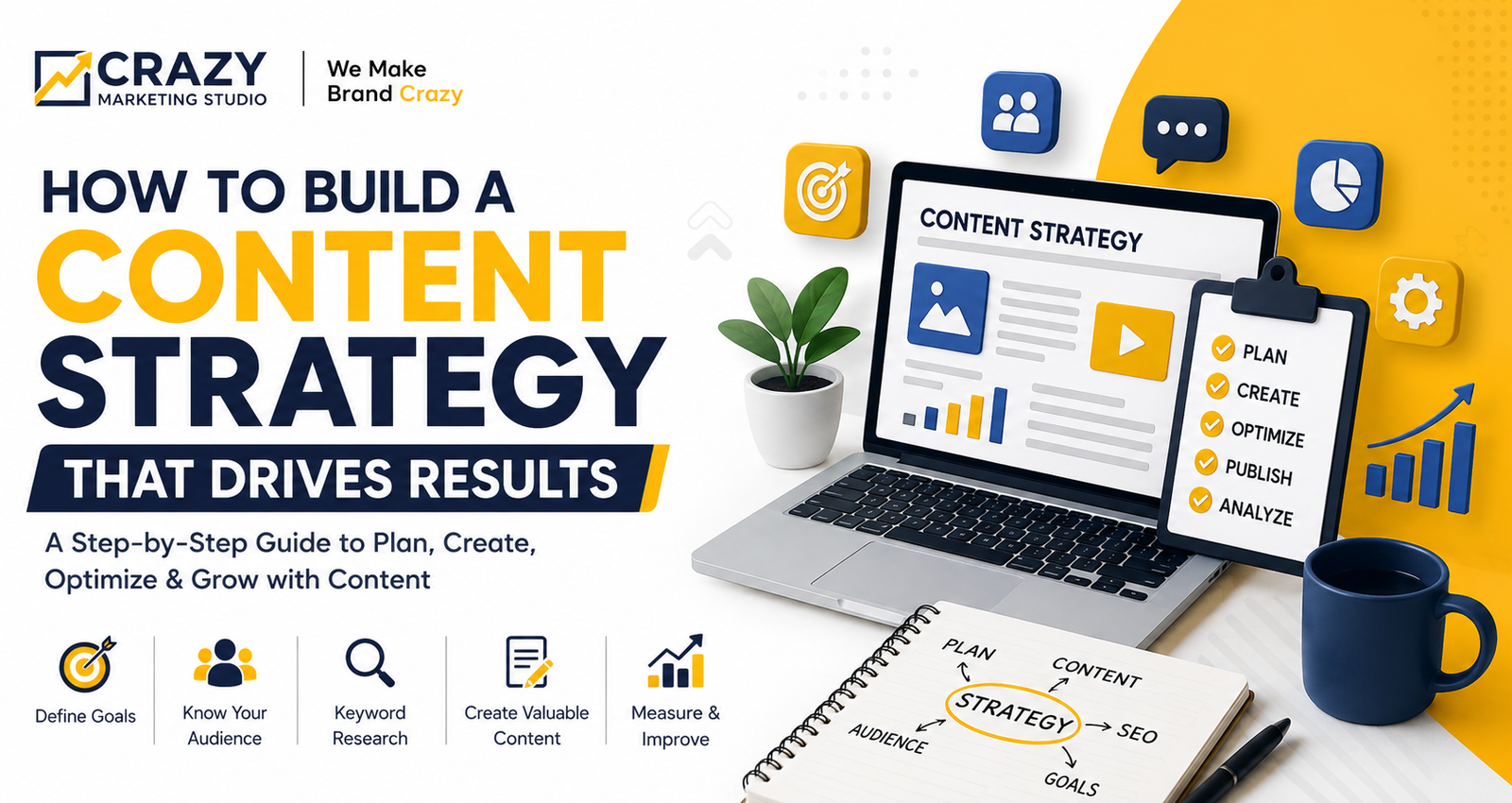
How to Build a Content Strategy That Drives Results
Learn how to build a content strategy that drives results with proven planning, SEO, audience research, and content marketing techniques.
How to Build a Content Strategy That Drives Results
How to Build a Content Strategy That Drives Results is one of the most important skills every marketer, business owner, and content creator should master. A well-planned content strategy helps you attract the right audience, improve search engine rankings, generate qualified leads, and increase conversions. Instead of creating random posts or blogs, a structured content strategy ensures every piece of content supports your business goals and delivers measurable results.
Whether you're running a startup, an eCommerce business, or a digital marketing agency, building the right strategy can transform your online presence.
What is a Content Strategy?
A content strategy is a structured plan that defines how your business creates, publishes, manages, and promotes content to achieve specific marketing objectives.
A successful content strategy includes:
- Business goals
- Target audience
- Keyword research
- Content planning
- SEO optimization
- Content distribution
- Performance tracking
Without a strategy, content becomes inconsistent and fails to deliver long-term growth.
Why Content Strategy Matters
Creating content without planning is like driving without a destination.
A strong content strategy helps you:
- Increase organic traffic
- Improve search engine rankings
- Build brand authority
- Generate quality leads
- Improve audience engagement
- Increase website conversions
- Create consistent brand messaging
Businesses that follow a documented content strategy generally achieve better marketing ROI than those publishing content randomly.
1: Define Clear Business Goals
Before writing a single blog or social media post, identify what you want your content to achieve.
Common goals include:
- Brand Awareness
- Lead Generation
- Website Traffic
- Sales Growth
- Customer Education
- Community Building
Every piece of content should support at least one of these goals.
2: Understand Your Target Audience
Knowing your audience is the foundation of an effective content strategy.
Research:
- Age
- Location
- Profession
- Interests
- Pain Points
- Buying Behaviour
- Frequently Asked Questions
Create audience personas so every article, video, reel, and social media post solves real customer problems
Step 3: Perform Keyword Research
SEO begins with keyword research.
Use tools like:
- Google Keyword Planner
- Ahrefs
- SEMrush
- Ubersuggest
- Google Search Console
Focus on:
- Primary Keywords
- Long-tail Keywords
- Question-based Keywords
- Local SEO Keywords
Naturally include your target keyword throughout the content without keyword stuffing
Step 4: Create High-Quality Content
Quality always beats quantity.
Your content should be:
- Helpful
- Original
- Well-structured
- Easy to read
- SEO optimized
- Actionable
Content formats include:
- Blog Posts
- Videos
- Infographics
- Reels
- Case Studies
- Email Newsletters
- Podcasts
- Carousel Posts
Always prioritize solving user problems.
Step 5: Build a Content Calendar
Planning content in advance keeps your marketing consistent.
Include:
- Publish Date
- Topic
- Target Keyword
- Content Format
- Platform
- CTA
- Author
- Status
A content calendar eliminates last-minute planning and improves productivity.
Step 6: Optimize Every Content for SEO
SEO optimization improves visibility on Google.
Follow these practices:
- Use H1, H2, and H3 headings
- Add internal links
- Add external links
- Optimize meta title
- Write compelling meta descriptions
- Use image alt tags
- Improve page speed
- Add FAQ sections
- Optimize URL structure
Good SEO helps search engines understand your content.
Common Content Strategy Mistakes
Avoid these mistakes:
- Publishing without research
- Ignoring SEO
- No audience targeting
- Inconsistent posting
- Weak headlines
- No call-to-action
- Not updating old content
- Focusing only on promotional content
Consistency and continuous improvement lead to better results.
Best Practices for Long-Term Success
To build a content strategy that consistently delivers results:
- Research before writing.
- Focus on user intent.
- Create evergreen content.
- Update blogs regularly.
- Maintain publishing consistency.
- Use visuals and videos.
- Optimize for mobile devices.
- Analyze performance monthly.
These practices improve engagement, rankings, and conversions over time.