
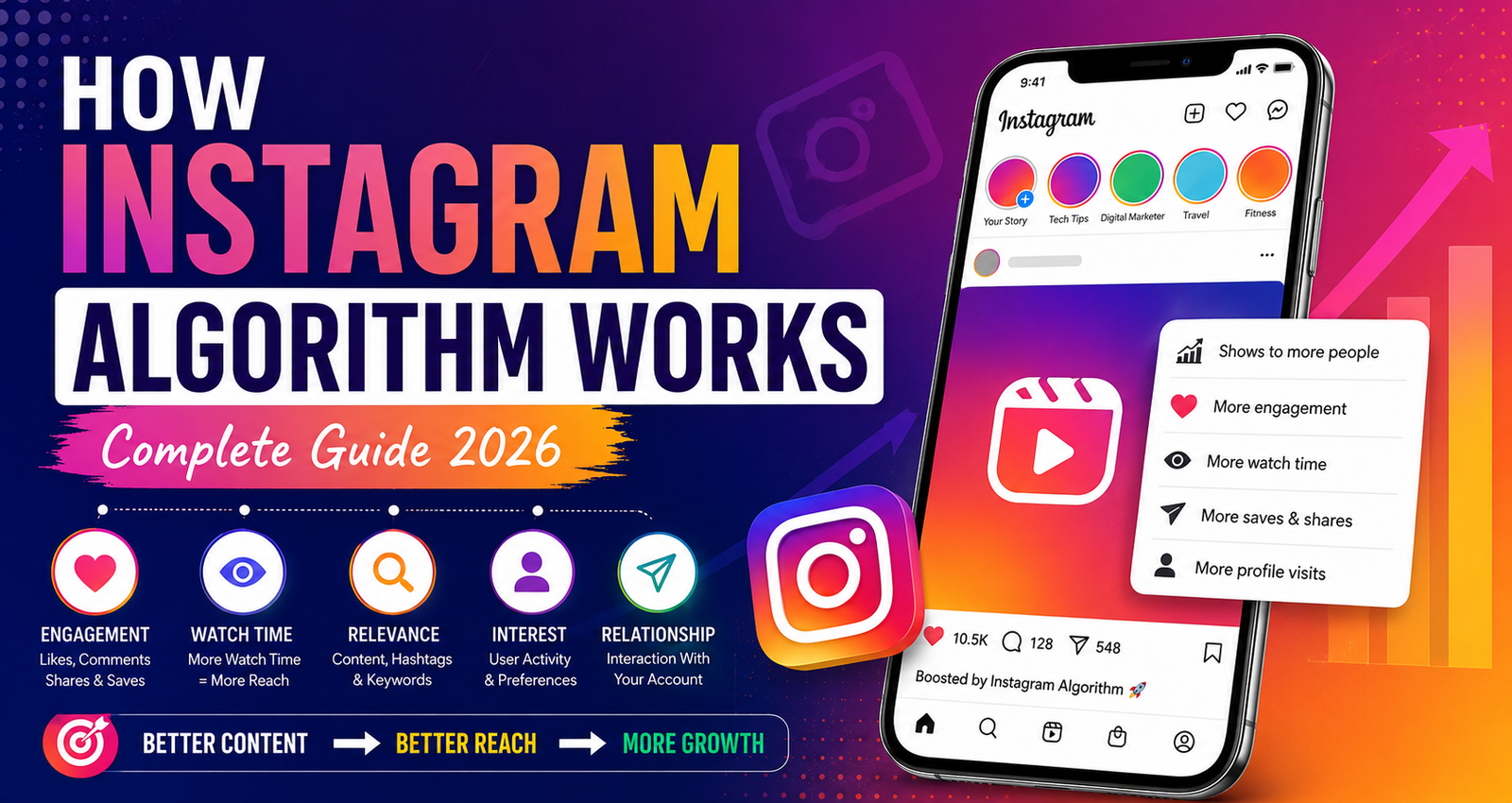
How Instagram Algorithm Works
Learn how Instagram algorithm works in 2026. Discover SEO tips, ranking factors, Reels strategy, and ways to increase Instagram reach.
How Instagram Algorithm Works is one of the most searched topics among content creators, influencers, businesses, and digital marketers in 2026. Every creator wants to understand why some posts go viral while others get low reach. The Instagram algorithm plays a major role in deciding which content appears on users’ feeds, Explore pages, Reels section, and Stories.
Today, Instagram is not just a photo-sharing app — it has become one of the biggest platforms for content marketing, personal branding, and business growth. Millions of creators upload Reels, carousel posts, Stories, and memes daily, but only optimized content gets maximum visibility.
The Instagram algorithm uses artificial intelligence and machine learning to analyze user behavior, interests, engagement, watch time, saves, shares, comments, and interactions. Based on these signals, Instagram decides which content should be shown to more people.
For businesses and creators, understanding the Instagram algorithm is extremely important because it directly affects:
What is the Instagram Algorithm?
The Instagram algorithm is a system that ranks and recommends content based on user interests and engagement patterns. Instead of showing posts in chronological order, Instagram prioritizes content that users are most likely to interact with.
The algorithm analyzes:
- Likes
- Comments
- Shares
- Saves
- Watch time
- Profile visits
- DM shares
- Content relevance
Its main goal is to keep users active on the platform for a longer time.
How Instagram Algorithm Works in 2026
Engagement Rate Matters Most
Instagram promotes content that receives:
- More likes
- More comments
- More saves
- More shares
Posts with high engagement are considered valuable content.
Pro Tip
“Saves” and “Shares” are stronger ranking signals than likes.
Watch Time for Reels
For Reels, Instagram tracks:
- Total watch time
- Rewatch rate
- Completion rate
If users watch your Reel till the end, the algorithm pushes it to more audiences.
Best Practice
- Keep hooks in first 3 seconds
- Use captions
- Add trending audio
Content Relevance
Instagram understands content using:
- Captions
- Keywords
- Hashtags
- Audio
- On-screen text
That’s why Instagram SEO is becoming important in 2026.
Example
If your content includes keywords like:
- Digital marketing
- Graphic design
- AI tools
- Instagram growth
Instagram may recommend your content to users interested in those topics.
instagram SEO Explained
Instagram now works similarly to a search engine.
Users search for:
- Content topics
- Businesses
- Influencers
- Tutorials
To rank better:
- Use keywords in captions
- Add keywords in bio
- Use searchable usernames
- Write SEO-friendly alt text
Common Mistakes That Reduce Reach
Avoid These Mistakes
- Posting low-quality content
- Ignoring hooks
- Using banned hashtags
- Inconsistent posting
- Clickbait captions
- Watermarked videos
These mistakes negatively affect algorithm performance.
How Businesses Use Instagram Algorithm for Growth
Brands use:
- Trending Reels
- Influencer collaborations
- SEO captions
- Carousel education posts
- Viral storytelling
to improve visibility and sales.
Small businesses especially benefit from organic reach strategies.
Final Verdict
Understanding how Instagram algorithm works can help creators grow faster without spending money on ads. The algorithm rewards valuable, engaging, and audience-focused content.
Creators who focus on:
- High watch time
- Better storytelling
- SEO captions
- Consistency
- Shareable content
will see better growth in 2026.
How Instagram Algorithm Works is no longer a mystery if creators understand engagement signals, SEO optimization, and audience behavior. Instagram’s AI-based algorithm rewards content that keeps users engaged and active on the platform. By creating valuable Reels, optimized captions, and shareable posts, creators and businesses can improve reach, increase followers, and grow organically in 2026.