
Content Writing vs Copywriting: Understanding the Key Differences
Learn the difference between content writing and copywriting, their skills, career opportunities, and how each helps businesses grow online.
Content Writing vs Copywriting: Understanding the Key Differences
Content Writing vs Copywriting is one of the most common comparisons in the digital marketing industry. Many beginners often assume that both are the same because they involve writing. However, their purpose, style, and goals are completely different.
In today's digital world, businesses need both content writers and copywriters to attract customers, build trust, increase engagement, and drive sales. Whether you are planning a career in digital marketing or looking to hire a professional writer, understanding the difference between content writing and copywriting is essential.
This guide explains the key differences, skills required, career opportunities, and how to choose the right path for your future.
What Is Content Writing?
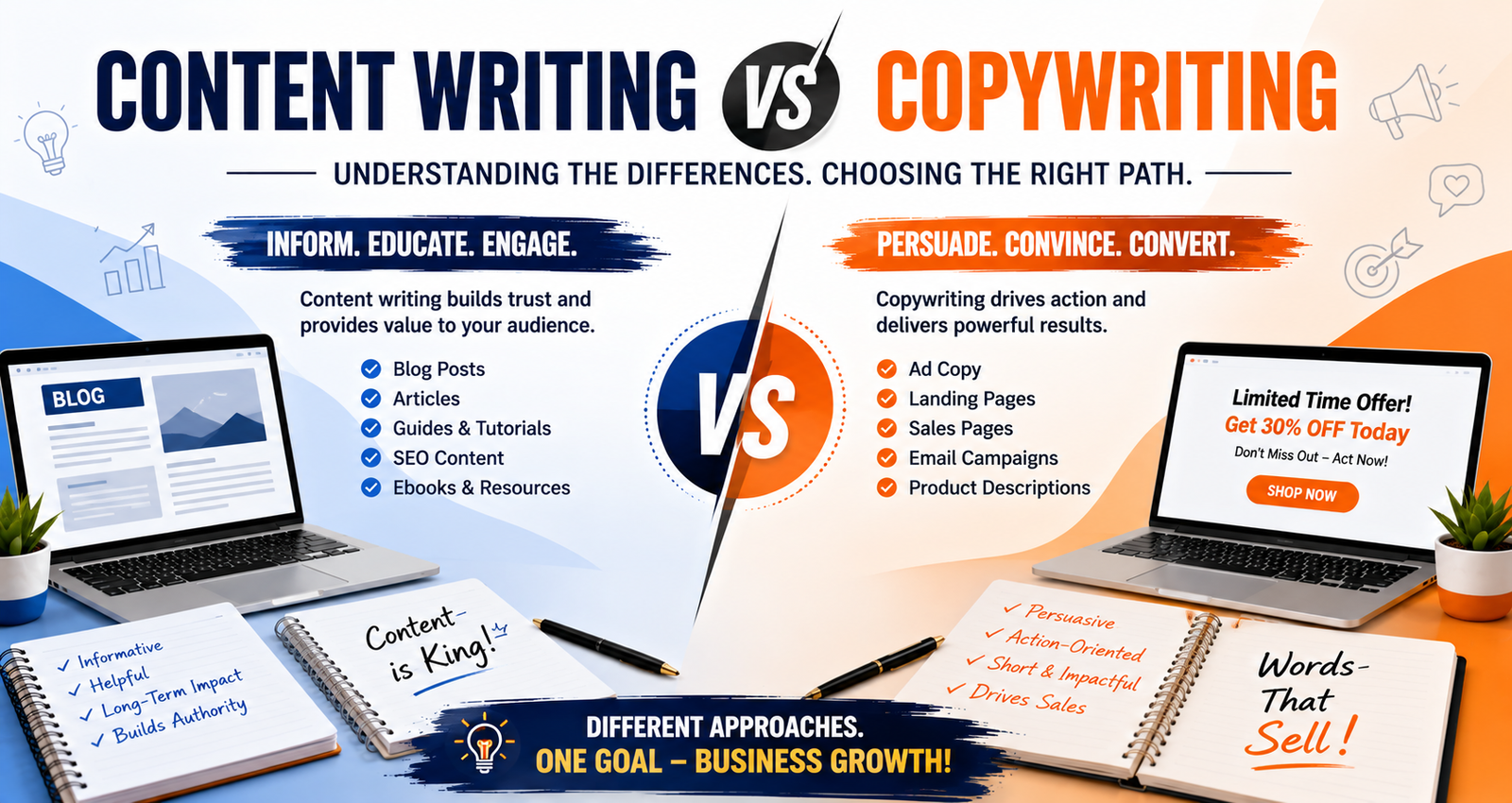
Content writing focuses on creating informative, educational, and engaging content that helps readers solve problems or learn something new.
The primary goal of content writing is to provide value to the audience while improving website traffic and search engine rankings.
Examples of Content Writing
- Blog posts
- Articles
- Website guides
- E-books
- Case studies
- White papers
- Educational content
- SEO content
Content writers usually focus on long-form content that helps users gain knowledge and build trust with a brand.
What Is Copywriting?
Copywriting is the art of writing persuasive content that encourages readers to take a specific action.
The primary objective of copywriting is conversion. A copywriter creates compelling messages that motivate users to purchase a product, sign up for a service, download a resource, or contact a business.
Examples of Copywriting
- Advertisement copy
- Landing pages
- Sales pages
- Email marketing campaigns
- Product descriptions
- Social media ads
- Google Ads
- Call-to-action content
Unlike content writing, copywriting is more focused on sales and lead generation.
Content Writing vs Copywriting: Key Differences
Purpose
Content writing aims to educate, inform, and engage readers.
Copywriting aims to persuade readers and generate conversions
Writing Style
Content writing follows an informative and educational tone.
Copywriting uses persuasive and action-oriented language.
Length
Content writing is generally longer and more detailed.
Copywriting is concise and focuses on delivering a powerful message quickly.
SEO Focus
Content writers often optimize articles for search engines using keywords and SEO best practices.
Copywriters focus more on conversion optimization and user psychology.
Results
Content writing helps build authority, organic traffic, and brand awareness.
Copywriting helps increase sales, leads, and customer actions.
Choose Content Writing If:
- You enjoy research and learning.
- You like writing detailed articles.
- You want to specialize in SEO and blogging.
- You enjoy educating readers.
Choose Copywriting If:
- You enjoy sales and marketing.
- You like writing persuasive messages.
- You are interested in advertising.
- You want to work on high-converting campaigns.
Many professionals eventually learn both skills because businesses need content that attracts traffic and copy that converts visitors into customers.
How Content Writing and Copywriting Work Together
Successful digital marketing strategies use both content writing and copywriting.
For example:
A business publishes an SEO blog article to attract visitors from search engines. Once visitors arrive on the website, persuasive copywriting encourages them to sign up for a newsletter or purchase a product.
This combination helps businesses increase both traffic and conversions.
You can learn more about modern content marketing strategies from the Content Marketing Institute at
Future Scope of Content Writing and Copywriting
The demand for skilled writers continues to grow as businesses invest more in digital marketing.
AI tools can assist writers, but human creativity, storytelling, and strategic thinking remain valuable.
Companies need professionals who can:
- Create SEO-friendly content
- Write persuasive sales copy
- Improve website conversions
- Build brand authority
- Generate quality leads
Learning both content writing and copywriting can significantly improve your career opportunities in digital marketing.