
Canva AI vs ChatGPT for Content Creation
Compare Canva AI vs ChatGPT for content creation, SEO blogging, captions, and marketing. Discover which AI tool is best in 2026.
Canva AI vs ChatGPT for content creation is becoming one of the biggest discussions in the digital marketing industry. As artificial intelligence continues to transform the way businesses create content, marketers, bloggers, designers, and social media creators are constantly searching for tools that can save time, improve creativity, and increase productivity. In 2026, AI-powered platforms are no longer just optional tools — they have become an important part of modern content marketing strategies.
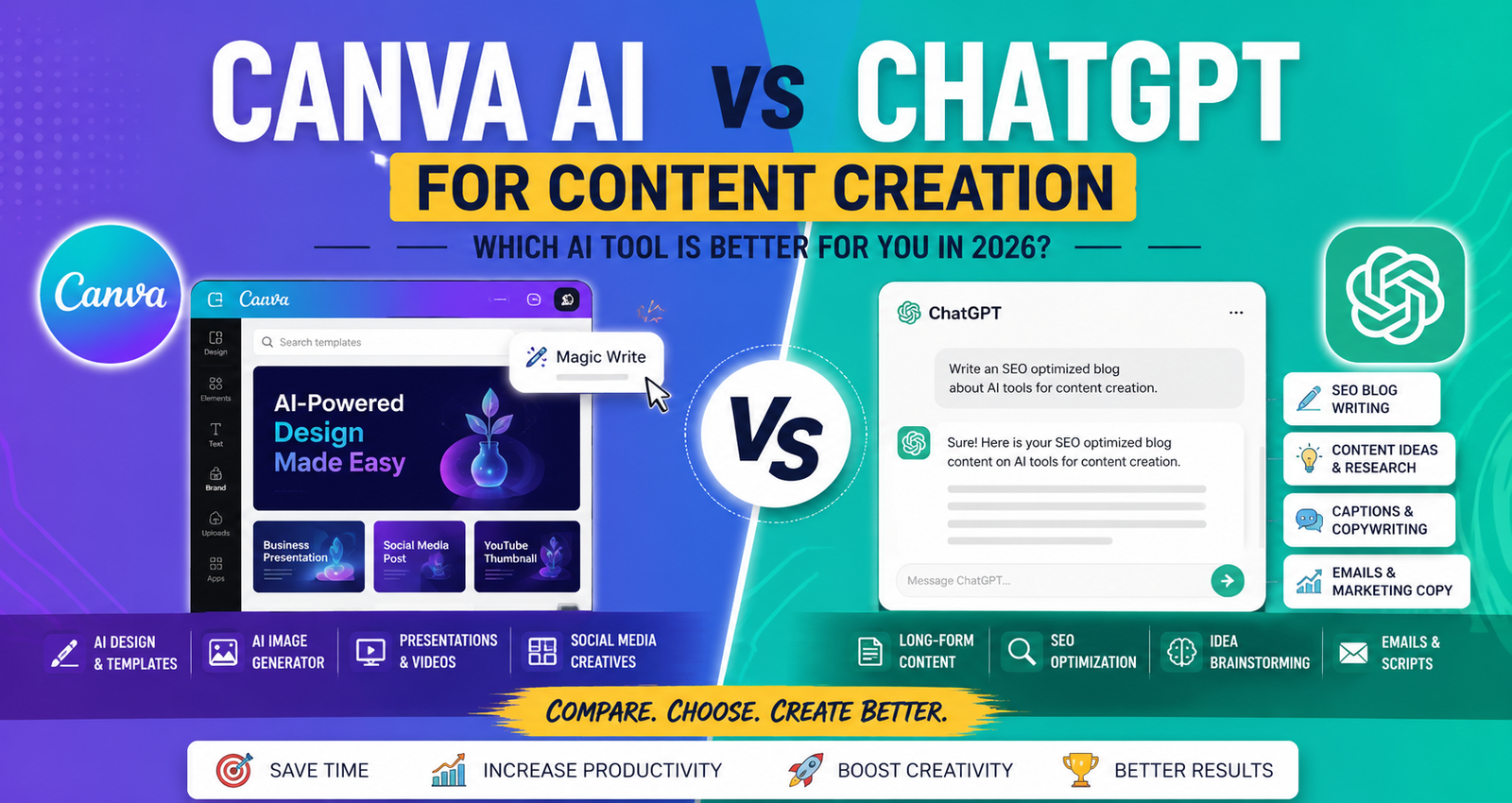
Today, two of the most popular AI tools dominating the market are Canva and OpenAI’s ChatGPT. Both platforms are designed to simplify content creation, but they work in completely different ways. Canva AI mainly focuses on graphic design, visual storytelling, presentations, and social media creatives, while ChatGPT is widely used for SEO blog writing, content research, script writing, email marketing, captions, and advanced copywriting.
For businesses and creators, choosing the right AI tool can directly impact branding, audience engagement, SEO rankings, and overall marketing performance. Some users prefer Canva AI because of its easy drag-and-drop design system and ready-made templates. Others prefer ChatGPT because of its ability to generate long-form content, optimize keywords naturally, and create human-like text within seconds.
The rise of AI tools has also changed the way digital marketers approach SEO content creation. Instead of spending hours brainstorming ideas, writing blogs, designing posts, and planning campaigns manually, creators can now automate major parts of the process using AI. This helps businesses produce more content consistently while maintaining quality and creativity.
What is Canva AI?
Canva is a graphic design platform that offers AI-powered tools like Magic Write, AI image generation, presentation creation, video editing, and social media post generation.
Features of Canva AI
- AI-powered social media designs
- Magic Write for captions & text
- AI presentation maker
- Background remover
- AI image generation
- Drag-and-drop editing
Best For
- Social media creators
- Graphic designers
- Beginners
- Brand presentations
What Is ChatGpt?
OpenAI developed ChatGPT to help users generate human-like text using artificial intelligence.
Features of ChatGPT
- SEO blog writing
- Caption generation
- Script writing
- Email writing
- Keyword optimization
- Content research
- Idea brainstorming
Best For
- Bloggers
- SEO writers
- Digital marketers
- Copywriters
- Businesses
Which Tool is Better for SEO Content?
For SEO blog writing, ChatGPT performs better because it can:
- Generate long-form blogs
- Optimize keywords naturally
- Create heading structures
- Write meta descriptions
- Suggest SEO improvements
- Generate internal linking ideas
Canva AI is useful for creating:
- Blog banners
- Infographics
- Pinterest graphics
- Social media creatives
Pro Tips
The best workflow is using both tools together:
- Use ChatGPT for writing
- Use Canva AI for visuals
Canva AI vs ChatGPT for Social Media Content
Canva AI Advantages
- Fast post creation
- Easy templates
- Brand kits
- Reel thumbnails
ChatGpt Advance
- Better hooks
- Viral captions
- Carousel text
- Storytelling
- Meme ideas
If your goal is visual branding, Canva AI wins.
If your goal is engagement and copywriting, ChatGPT is better.
Pricing Comparison
Canva AI
- Free plan available
- Canva Pro unlocks premium AI features
ChatGPT
- Free version available
- Paid version offers advanced AI capabilities
Canva AI vs ChatGPT for content creation depends on your goals. Canva AI helps with design automation, while ChatGPT dominates in SEO writing and content strategy. Businesses, creators, and marketers can increase productivity by using both platforms together for complete content creation workflows.