
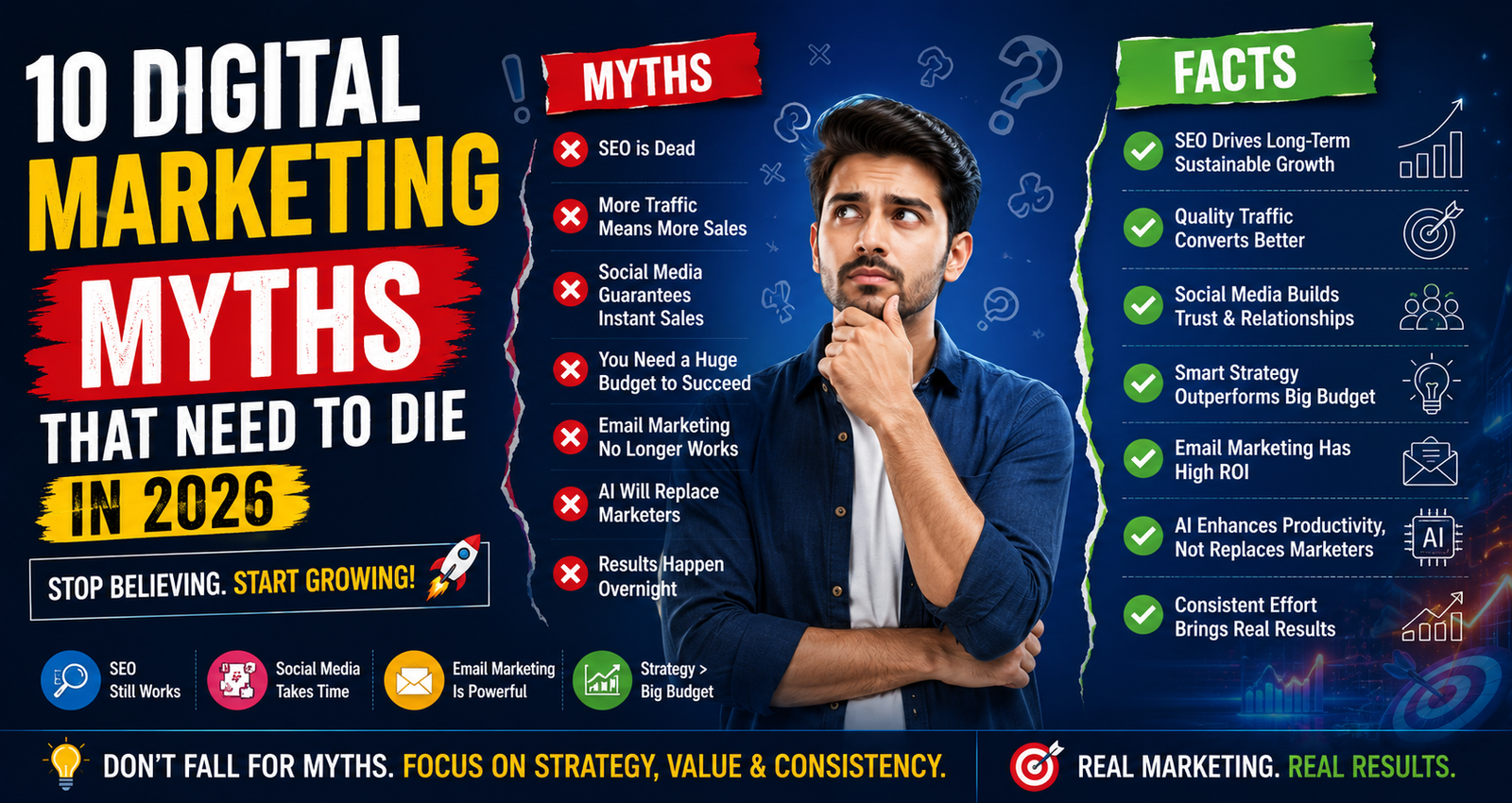
10 Digital Marketing Myths That Need to Die in 2026
Discover the most common digital marketing myths that still exist in 2026 and learn what businesses should focus on for real growth.
Digital Marketing Myths continue to mislead businesses, students, entrepreneurs, and marketers despite the rapid evolution of the digital landscape. As online marketing becomes more sophisticated, outdated beliefs and misconceptions often prevent people from achieving the results they desire. Many businesses waste time, money, and effort following advice that may have worked years ago but is no longer effective today.
The digital marketing industry changes constantly due to algorithm updates, AI-driven technologies, shifting consumer behavior, and emerging platforms. Unfortunately, many myths continue to circulate, causing confusion and unrealistic expectations. Some people believe SEO is dead, while others think social media guarantees instant sales or that digital marketing requires massive budgets to succeed.
The truth is that successful digital marketing relies on strategy, consistency, data analysis, and continuous learning. Understanding what works—and what doesn't—can help businesses make smarter decisions and achieve better outcomes.
In this blog, we'll debunk the most common digital marketing myths that still exist in 2026 and explain what businesses should focus on instead.
10 Digital Marketing Myths That Need to Die in 2026
Myth 1 – SEO Is Dead
One of the oldest digital marketing myths is that SEO no longer works.
Reality
SEO remains one of the most effective ways to generate long-term organic traffic.
Benefits of SEO include:
- Sustainable website traffic
- Higher search visibility
- Better lead generation
- Improved brand authority
SEO has evolved, but it is far from dead.
Myth 2 – More Traffic Means More Sales
Many businesses assume that increasing website traffic automatically leads to higher revenue.Reality
Quality matters more than quantity.
Targeted traffic from the right audience typically produces:
- Better conversions
- Higher engagement
- Improved ROI
A smaller audience with strong intent often outperforms large amounts of irrelevant traffic.
Myth 3 – Social Media Guarantees Instant Sales
Many brands expect immediate results after launching social media campaigns.
Reality
Social media is primarily a relationship-building channel.
Success requires:
- Consistency
- Valuable content
- Community engagement
- Long-term strategy
Trust and credibility take time to build.
Myth 4 – Digital Marketing Is Only for Large Businesses
This is one of the most damaging digital marketing myths for small business owners.
Reality
Digital marketing levels the playing field.
Small businesses can compete through:
- Local SEO
- Content marketing
- Social media
- Email marketing
Even limited budgets can produce excellent results when used strategically.
Myth 5 – You Need a Huge Budget to Succeed
Many people believe digital marketing is expensive.
Reality
While larger budgets can accelerate growth, success depends more on strategy than spending.
Affordable marketing channels include:
- SEO
- Blogging
- Email marketing
- Organic social media
Smart execution often outperforms large advertising budgets.
Myth 6 – Email Marketing No Longer Works
Some marketers assume email marketing is outdated.
Reality
Email marketing remains one of the highest ROI marketing channels.
Benefits include:
- Direct communication
- Lead nurturing
- Customer retention
- Personalized messaging
Well-executed email campaigns continue to generate strong results.
Myth 7 – Digital Marketing Requires Coding Skills
Students often avoid marketing because they think technical skills are mandatory.
Reality
Most digital marketing roles do not require coding.
Professionals can specialize in:
- SEO
- Social Media Marketing
- Content Marketing
- Paid Advertising
- Email Marketing
Basic technical understanding is helpful, but coding expertise is rarely necessary.
Myth 8 – More Followers Mean More Success
Businesses often focus heavily on follower counts.
Reality
Engagement matters more than audience size.
A smaller engaged audience can generate:
- More leads
- Better conversions
- Higher customer loyalty
Follower count alone is not a reliable success metric.
Myth 9 – AI Will Replace Digital Marketers
The rise of AI has created concerns throughout the industry.
Reality
AI enhances productivity but does not replace strategic thinking.
Human marketers are still needed for:
- Creativity
- Brand strategy
- Customer understanding
- Campaign planning
AI works best as a support tool rather than a replacement.
Myth 10 – Results Happen Overnight
Perhaps the most common of all digital marketing myths is expecting instant success.
Reality
Effective digital marketing requires:
- Patience
- Consistency
- Optimization
- Continuous testing
Most successful campaigns take time to produce meaningful results.